
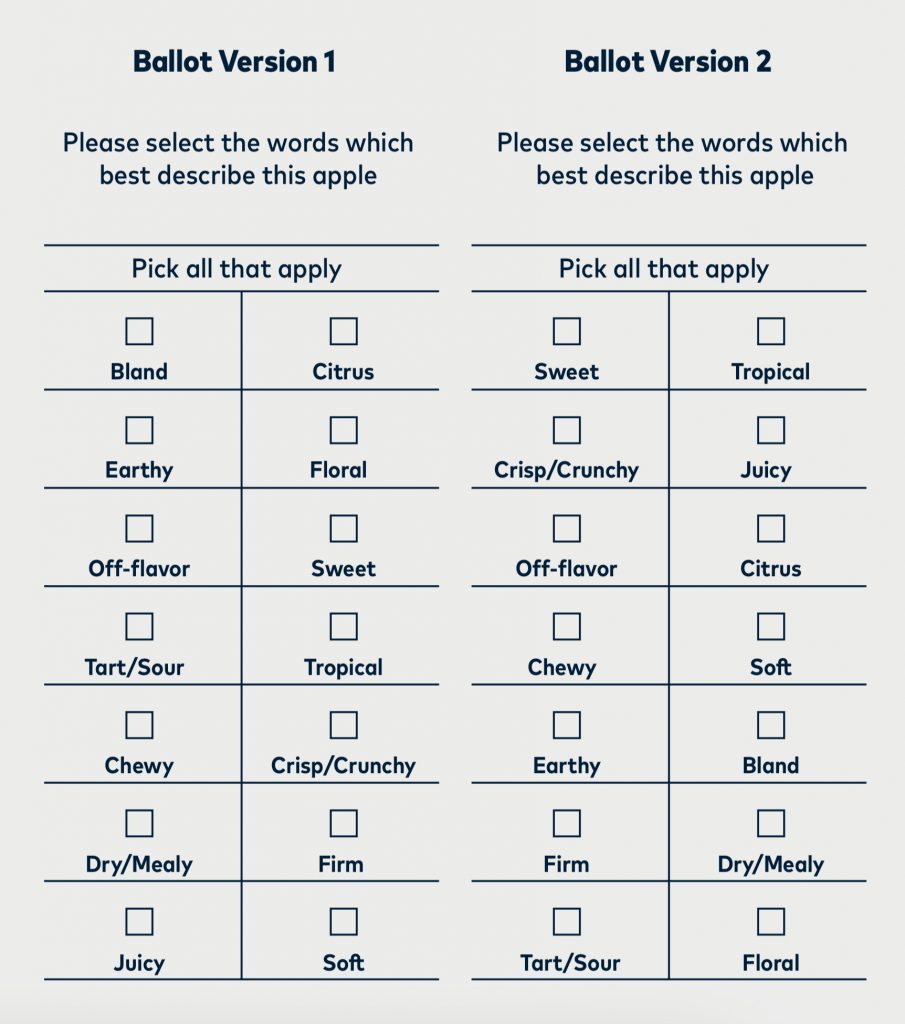
The Check-All-That-Apply (CATA) method is a sensory evaluation tool widely utilized across the food and beverage industries for profiling products. In the coffee sector; it captures a range of sensory attributes by allowing assessors to select descriptors that apply to the product, Its adaptability and simplicity makes CATA accessible to both trained and untrained assessors, providing robust insights into consumer preferences. This article examines the CATA method’s foundation, it’s role in sensory science; and best practices for implementation, especially in coffee evaluation. Recent updates in the Specialty Coffee Association’s Coffee Value Assessment (CVA) are explored, offering a comprehensive perspective on how CATA fits within the broader framework of coffee value evaluation.
What is CATA (Check-All-That-Apply)?
The Check-All-That-Apply (CATA) method is a sensory profiling technique that enables assessors to select applicable descriptors from a list, allowing for quick sensory evaluation without the need for extensive training, This method, gaining popularity in food and beverage science, is particularly valuable in understanding multi-attribute products like coffee, CATA’s simplicity facilitate its use with both consumer panels and trained assessors; yielding insights that reflect both expert opinions and consumer preferences (Ares & Varela, 2017).
In sensory science, the CATA method falls under descriptive methods, though its ease of use allows it to capture affective data as well. This dual functionality make CATA particularly valuable when analyzing products with complex flavor profiles, such as coffee; where consumer-driven preferences and intrinsic quality are closely linked (Lawless & Heymann, 2010).
Historical Background of the CATA Method
The foundation of sensory science traces back to the early 20th century, with systematic methods like triangle tests and difference-preference tests established in the 1930s-40s. The CATA method, however; emerged as part of a broader evolution towards intuitive and rapid sensory tools in the 2000s. The Specialty Coffee Association’s research highlight the value of CATA and other streamlined sensory methods to better capture the diverse sensory profiles of specialty coffees and consumer preferences without requiring extensive assessor training (SCA, 2024a; SCA, 2021).
The development of CATA aligns with an industry-wide shift towards consumer-focused sensory analysis, This evolution is supported by sensory science literature that emphasizes accessible; flexible methods for capturing sensory data across large, diverse groups of assessors. CATA’s compatibility with consumer testing is particularly valuable in industries like coffee, where the product’s success rely heavily on consumer acceptance and perception (SCA, 2024b).
Where and Why to Use This Evaluation Method
CATA’s versatility and efficiency make it ideal for use in a variety of industries, including food, beverages, cosmetics; and healthcare. Within the coffee industry, CATA has been utilized to evaluate diverse attributes across origins, roast levels, and brewing methods. By allowing assessors to select descriptors like “fruity”, “chocolatey”, or “bitter,” CATA captures the range of sensory perceptions associated with specific coffee profiles (Jin et al., 2018).
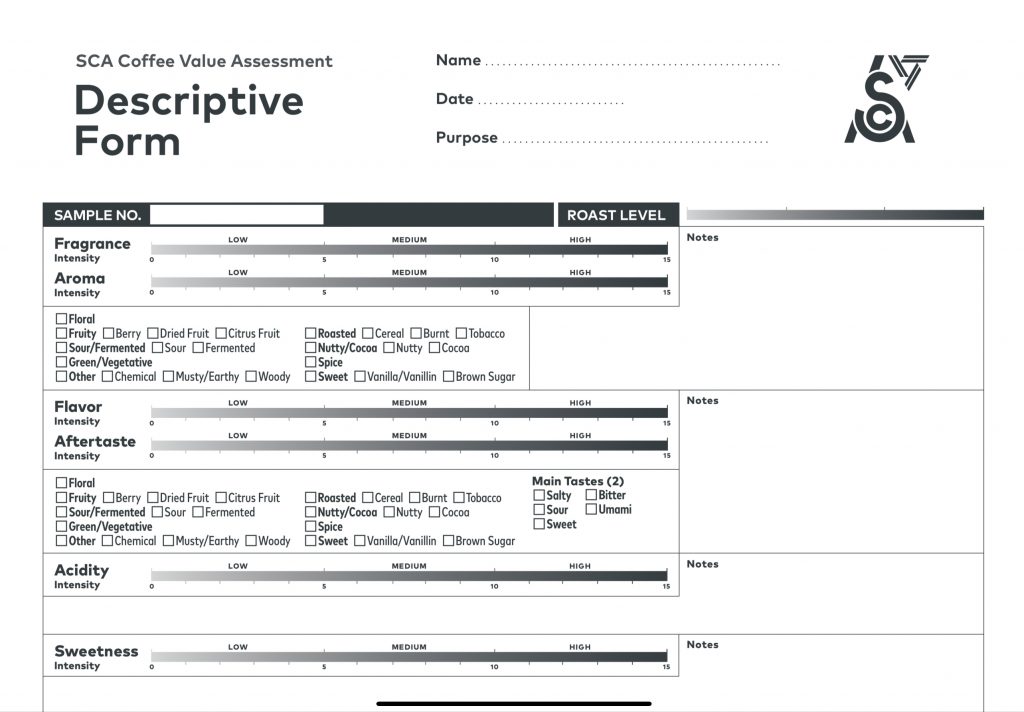
In the context of coffee, the SCA’s recent Coffee Value Assessment (CVA) reflects a commitment to sensory methods that provide detailed profiles of a coffee’s attributes. By employing tools like CATA alongside descriptive and affective assessments, the CVA framework allows for a holistic approach to evaluating coffee quality and value based on both intrinsic (sensory) and extrinsic (informational) attributes (SCA, 2023a; SCA, 2022).
CATA’s unique adaptability also support affective measurements, enabling researchers to merge CATA with hedonic tests to understand consumer-preferences. For example; CATA is valuable in studies where consumer-driven insights are necessary, as it provides an intuitive way to gather data that aligns with real-world consumer experiences and expectations (SCA, 2024a).
Subjective vs. Objective Sensory Evaluation
In sensory science, evaluation methods are categorized as subjective or objective:
• Objective methods; Use instruments or trained assessors to obtain quantifiable measurements.
• Subjective methods; Rely on individual perceptions, capturing data that may vary between assessors.
CATA, while subjective, provide robust data when used with sufficient sample sizes. Studies in coffee evaluation demonstrate CATA’s efficacy in capturing consistent findings across diverse groups; offering a nuanced view of products without the limitations of fully objective assessments. The SCA’s descriptive and affective assessments within the CVA framework reflect a similar balance between objective and subjective evaluation, allowing the industry to address both expert and consumer perspectives on coffee quality and value. (SCA, 2024b; SCA, 2023b).
Applying CATA to Coffee Evaluation
In coffee, CATA helps assessors identify key sensory attributes, including aroma, flavor, acidity, body, and mouthfeel. The SCA’s Coffee Value Assessment (CVA) system incorporates CATA as part of its broader framework, allowing for a detailed yet accessible approach to sensory profiling. Descriptors such as “floral”, “citrus”, “nutty,” or “smooth” ,can capture unique coffee profiles linked to origin ,processing, and roast level. (SCA, 2021; SCA, 2023b).
In this context, CATA can complement traditional coffee cupping by providing a more intuitive, consumer-friendly method for sensory assessment . The CVA’s use of CATA is part of a larger shift toward capturing both intrinsic attributes (e.g., flavor notes) and extrinsic attributes (e.g., origin , sustainability certification) to align with the coffee industry’s evolving standards for quality and value . (SCA, 2023a; SCA, 2022).
Best Practices for CATA Implementation
Descriptor Selection
Effective descriptor selection is crucial for capturing accurate sensory profiles. The SCA’s guidelines emphasize choosing descriptors that are specific, non-overlapping, and relevant to the product category . For coffee ,this may involve terms that reflect both basic attributes (e.g., “sweet”, “acidic,”) and more specific notes (e.g. ,“berry-like,” “toasty”) ,providing a comprehensive sensory profile (SCA, 2023b).
Assessor Orientation
While extensive training is unnecessary, a brief introduction to the descriptors can help reduce variability and improve consistency .Providing reference samples for certain descriptors can further enhance the reliability of the data ,a practice encouraged within the SCA’s Coffee Value Assessment to help assessors accurately identify and select sensory attributes (SCA, 2024a).
Data Analysis
Data from CATA assessments can be analyzed using several statistical methods:
• Frequency Analysis: Calculates the frequency of selected descriptors to identify dominant attributes.
• Correspondence Analysis (CA): Maps relationships between descriptors and products; helping identify sensory clusters.
• Hierarchical Cluster Analysis (HCA): Groups products based on similar profiles, aiding in product categorization.
• Multiple Factor Analysis (MFA): Integrates data from different sensory methods, useful in comparing CATA with conventional sensory analysis results .(SCA, 2024b; SCA, 2021).
Panel Size
A larger panel size increases data reliability, minimizing individual bias. The SCA recommends a minimum of 50 participants for consumer panels, though larger samples provide greater robustness. In coffee evaluation ,using larger sample sizes helps achieve more accurate ,consumer-relevant insights , particularly when profiling popular market segments .(SCA, 2023b; SCA, 2024a).
Common Errors and Pitfalls in CATA Implementation
• Descriptor Overlap: Redundant descriptors can lead to inconsistent responses. Carefully selected terms, as advised by the SCA, avoids confusion and ensure clarity in sensory data.
• Order Bias: The order of descriptors may affect responses, so randomizing their order is recommended.
• Fatigue: Excessive descriptor lists can cause fatigue, especially in multi-sample evaluations. Keeping the list concise is essential to maintain data quality (SCA, 2024b; SCA, 2022).
Limitations and Alternative Methods
While CATA is valuable for its simplicity, it may lack the depth offered by fully trained panels. Alternative methods like Free-Choice Profiling (FCP) or Flash Profiling (FP) can provide more detailed insights , particularly for complex products. Combining CATA with these methods can enhance the depth and nuance of sensory data ,especially when profiling high-value specialty coffees .(SCA, 2024b; SCA, 2023a)
Practical Implications and Future Research Directions
The Coffee Value Assessment system by the SCA demonstrates CATA’s applicability in coffee. As the coffee industry evolves, integrating digital tools and AI with CATA assessments may offer further insights into consumer preferences. Future research might explore how machine learning can optimize CATA’s role within sensory science, enabling faster; more precise profiling aligned with market trends,
Conclusion
The Check-All-That-Apply (CATA) method provides a practical, accessible approach to sensory evaluation, capturing both consumer and expert perspectives. When implemented with best practices, CATA is a valuable tool in coffee evaluation, supporting product innovation, quality control ,and consumer preference studies. By combining CATA with broader sensory frameworks like the SCA’s Coffee Value Assessment ,the coffee industry can achieve a comprehensive understanding of value and quality in specialty coffee.
References
• Ares, G., & Varela, P. (2017). Methods in Consumer Research: Volume 1, New Approaches to Classic Methods. Woodhead Publishing.
• Jin, D., et al. (2018). Consumer preferences and sensory profiling of coffee: Applications of CATA and other sensory methods. Food Quality and Preference.
• Lawless, H. T., & Heymann, H. (2010). Sensory Evaluation of Food: Principles and Practices. Springer.
• Specialty Coffee Association (SCA). (2021). Attributes Framework White-paper 2021.
• Specialty Coffee Association (SCA). (2022). CVAS Evolution Report 2022.
• Specialty Coffee Association (SCA). (2023a). SCA Coffee Value Assessment: Descriptive Assessment (SCA Standard 103-2024).
• Specialty Coffee Association (SCA). (2023b). A New System to Assess Coffee Value: Introducing the Beta Version of the CVA.
• Specialty Coffee Association (SCA). (2024a). Coffee Value Assessment: Affective Assessment (SCA Standard 104-2024).
• Specialty Coffee Association (SCA). (2024b). Extrinsic Assessment Report and Beta Proposal.
Leave a Reply