
When evaluating coffee sensory attributes, accurate and reliable results depend not only on identifying flavours and aromas qualitatively but also on measuring these sensory attributes quantitatively. Quantitative measurement and standardized sensory evaluation methods ensure consistent, objective, and reproducible results, crucial for the coffee industry.
Two core responsibilities of professional coffee evaluators (cuppers) include:
1. Identifying and describing sensory attributes (Flavour Attributes)
2. Accurately measuring the intensity of those attributes (Flavour Intensity)
Without proper quantification and standardization, sensory descriptions may become subjective, vague, or inconsistent, making comparisons challenging or even impossible.
Why is Quantitative Measurement Crucial?
Quantitative measurement provides clarity and precision, helping evaluators communicate clearly and consistently about coffee sensory characteristics. The key advantages include:
• Creating a shared, standardized language for describing sensory intensities.
• Increasing accuracy, repeatability, and reliability of sensory evaluations.
• Facilitating accurate comparisons across coffee samples, batches, and sensory panels.
• Enabling effective communication among producers, roasters, buyers, and consumers.
The Role of Standardization in Sensory Evaluation
Standardization involves aligning evaluators’ sensory perceptions through frequent calibration sessions using reference samples. By using standardized sensory references, evaluators achieve uniformity and consistency, which significantly improves the validity of sensory evaluation.
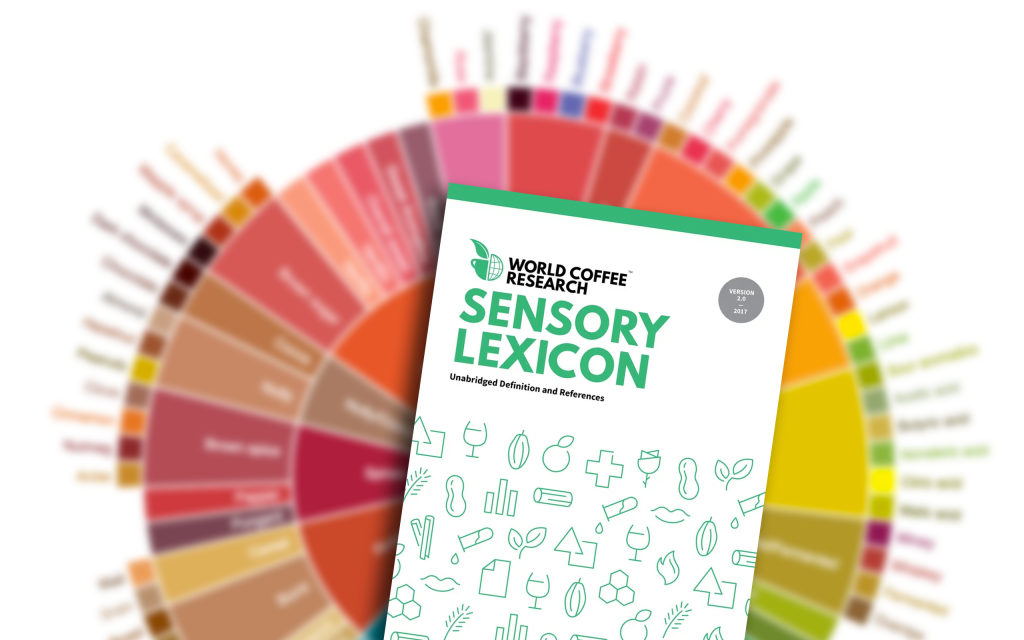
One of the most respected resources for sensory standardization is the Coffee Sensory Lexicon developed by World Coffee Research (WCR). The Coffee Sensory Lexicon is an extensive reference guide, providing precise definitions and standardized reference samples for specific flavor attributes and intensities. It helps evaluators across the industry calibrate their perceptions and measurement of intensity to achieve consistency and reproducibility.
Using the 0–15 Point Intensity Scale for Coffee Sensory Evaluation
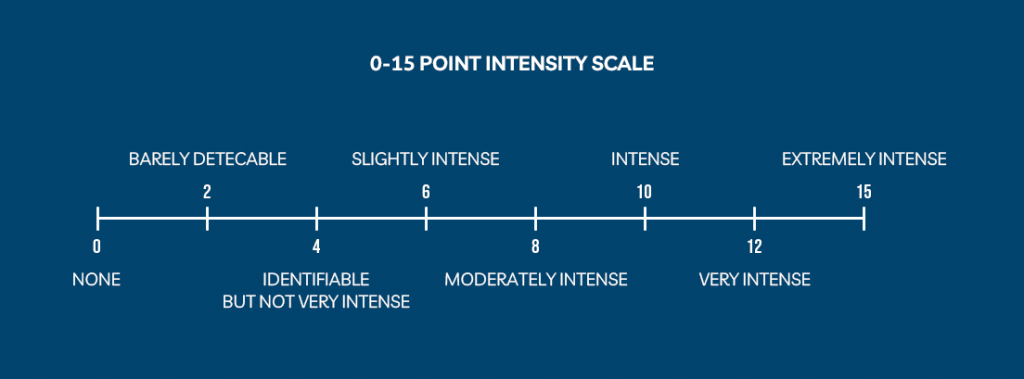
The 0–15 Point Intensity Scale is a widely accepted quantitative tool used in the coffee industry for sensory evaluation. It allows evaluators to assign a numeric intensity score to sensory attributes like aroma, flavor, acidity, sweetness, bitterness, and body.
| Score Range | Intensity Level | Sensory Definition |
|---|---|---|
| 0 | None | Attribute not detectable at all. |
| 2 | Barely Detectable | Attribute barely perceptible, detected only with considerable focus. |
| 4 | Identifiable but Not Intense | Attribute clear but at low intensity. |
| 6 | Slightly Intense | Attribute distinct but mild intensity. |
| 8 | Moderately Intense | Attribute very clear and noticeable, medium intensity. |
| 10 | Intense | Attribute strongly perceived, clear, and prominent. |
| 12 | Very Intense | Attribute exceptionally pronounced and powerful. |
| 15 | Extremely Intense | Attribute is extremely prominent, overwhelmingly strong, rarely observed. |
Example from Coffee Sensory Lexicon: “Dark Chocolate”
The Coffee Sensory Lexicon provides clear examples to calibrate sensory evaluation and intensity scoring. A precise example of the attribute “Dark Chocolate” intensity is defined as:

When is a Flavor Attribute Considered Part of a Coffee’s Flavor Profile?
From a scientific perspective, a sensory attribute (e.g., fruity, floral, chocolatey) is officially considered part of a coffee’s primary flavor profile only if:
• Its intensity reaches or surpasses a certain threshold (generally intensity 5 or higher).
• It is perceptible and identifiable to a significant proportion of consumers, not merely trained sensory professionals.
For example, if a coffee exhibits a “berry” attribute at a very low intensity (2–3), it may not be identified or experienced by most consumers, thus rarely becoming part of the coffee’s stated flavor profile. However, a clearly identifiable berry flavor at intensity 6–8 is readily noticeable and becomes a significant part of the coffee’s described sensory profile.
The Importance of Training and Calibration
Quantitative measurement accuracy and effectiveness rely heavily on continuous training and frequent calibration. Calibration is a deliberate practice involving evaluators using standard reference samples to align their sensory perceptions consistently and objectively. Without regular training and calibration, even scientifically precise intensity scales may yield inconsistent results.
For credible, scientific sensory evaluation outcomes, evaluators should:
• Engage in routine calibration sessions at regular intervals.
• Use standardized reference samples from the Coffee Sensory Lexicon or similar reputable sources.
• Record and communicate intensity measurements meticulously and consistently.
Expanding Your Sensory Vocabulary and Skills
A well-trained sensory evaluator not only masters coffee evaluation but also expands sensory experiences beyond coffee, exploring categories such as tea, wine, chocolate, olive oil, spices, and other food and beverages. Such interdisciplinary training further enhances evaluators’ sensitivity and precision, contributing to a more robust sensory memory and greater overall expertise.
Conclusion
Effective coffee sensory evaluation demands both qualitative skill in describing attributes and quantitative skill in measuring their intensity. Standardized tools like the 0–15 point intensity scale, along with calibrated references from the Coffee Sensory Lexicon, ensure evaluators’ sensory judgments remain accurate, reproducible, and scientifically robust.
Through quantitative measurement, standardization, and continuous sensory calibration, evaluators across the coffee industry can create a consistent, reliable language for evaluating and communicating coffee quality.
Leave a Reply